Undergraduate and graduate researchers from the Early Childhood Networked Improvement Community (EC NIC) presented four applied Continuous Quality Improvement projects at the Council of Graduate Students in Education Spring Research Conference.
These projects reflect the EC NIC model in action: applied inquiry, equity centered systems thinking, and leadership development across stages of training.
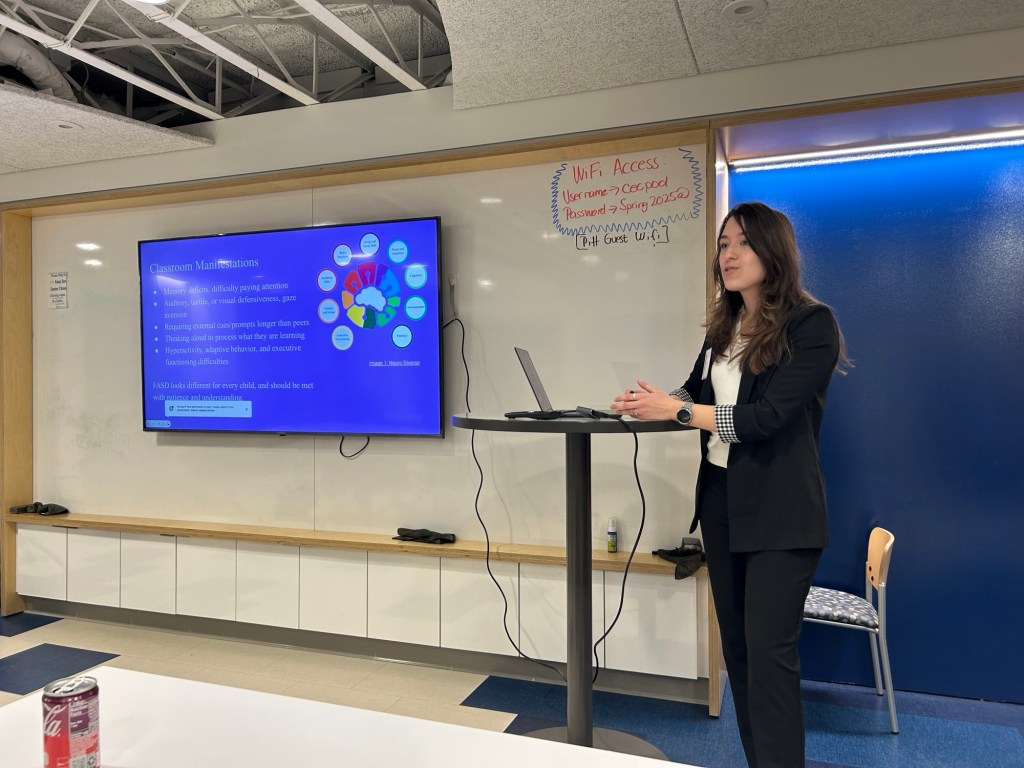
Trauma Responsive Early Childhood Consultation for FASD
This design phase CQI project examined the development of a trauma responsive early childhood consultation model to support educators serving children with Fetal Alcohol Spectrum Disorder. Using a Networked Improvement framework, the team focused on strengthening educator knowledge, practical strategies, and systems alignment to better meet the needs of children with complex neurodevelopmental profiles.
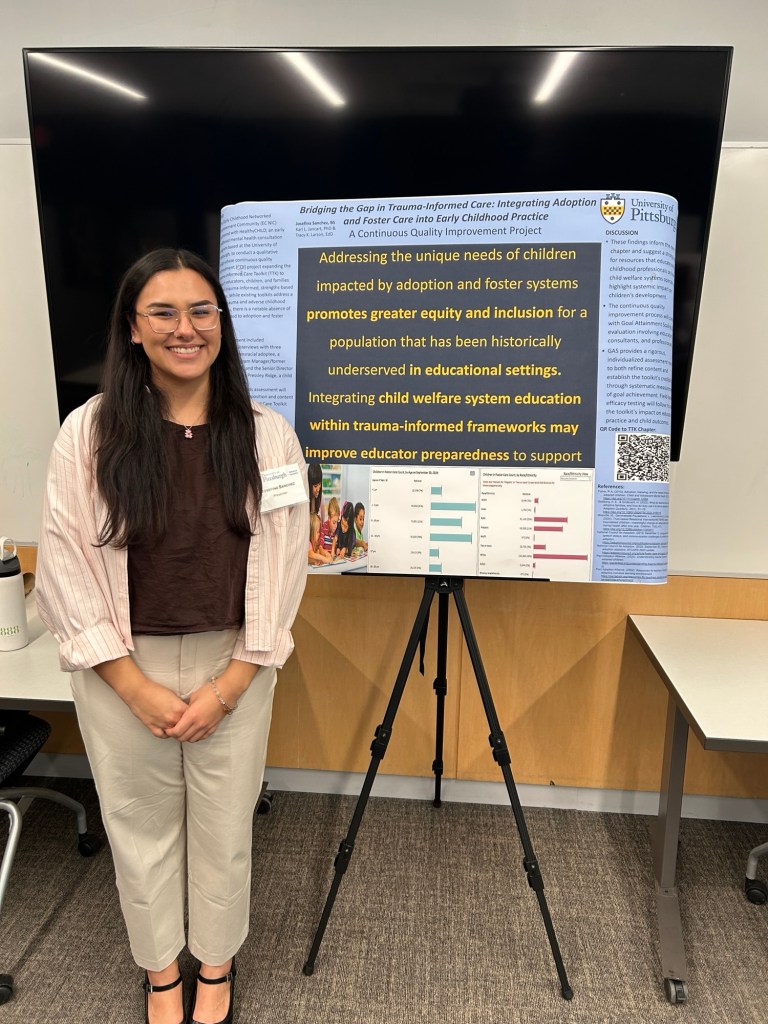
Integrating Adoption and Foster Care into Trauma Informed Practice
This project addressed the unique needs of children impacted by adoption and foster systems. By integrating child welfare considerations into trauma informed early childhood practice, the team aimed to increase educator preparedness and strengthen equitable, inclusive classroom environments.
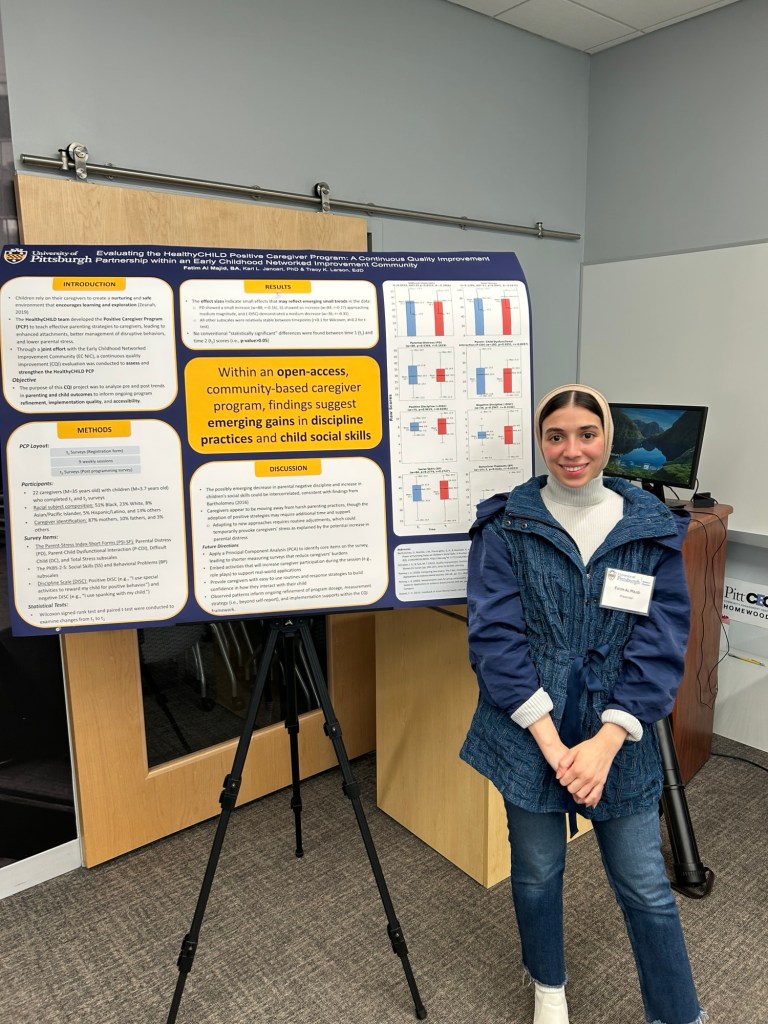
Evaluating the HealthyCHILD Positive Caregiver Program
Within an open access, community based model, this CQI project examined caregiver and child outcomes associated with the HealthyCHILD Positive Caregiver Program. Preliminary findings indicated growth in caregiver discipline practices and child social skills, informing ongoing program refinement within the Networked Improvement Community.
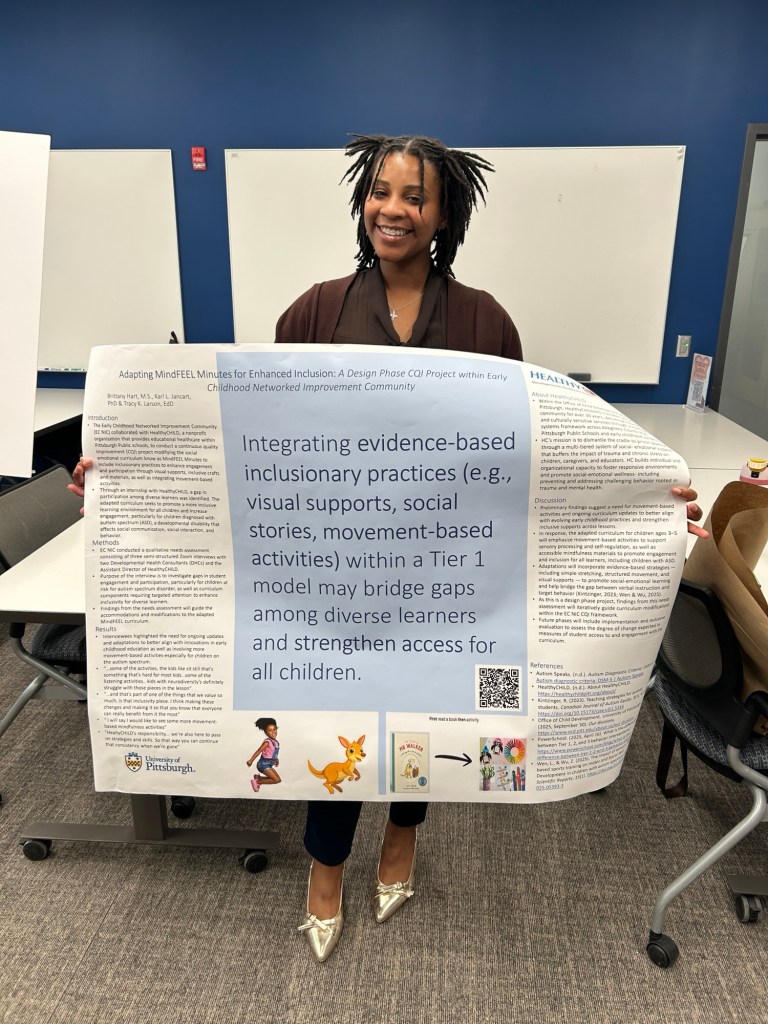
Strengthening Tier 1 Inclusion Supports
This design phase CQI project focused on adapting universal inclusion practices, including visual supports, social stories, and movement based strategies, to enhance access for diverse learners. The work centered on strengthening Tier 1 supports so that inclusive practices are embedded within everyday classroom routines.
Networked Improvement in Practice
The Early Childhood Networked Improvement Community uses improvement science methodology to address complex, real world problems of practice. Participants identify shared aims, use common measures, test change ideas through iterative cycles, and learn across sites to accelerate improvement.
By engaging undergraduate and graduate scholars in applied Continuous Quality Improvement work, EC NIC builds both knowledge and leadership capacity. Students are not only learning about systems change. They are contributing to it.
 Early Childhood Networked Improvement Community
Leave a comment